Offshore Finance: How The Bedrock of The Global Art Industry Robbed Our Future
"We all have one foot in prison. Maybe that's why we were all paid so much."

Art Industry Insights With Reena Devi’s Official Unofficial Newsletter
If you are receiving this unfiltered, unfancy newsletter, you are a supporter, subscriber, or collaborator of Art Industry Insights With Reena Devi, or someone whom I consider a future supporter, subscriber, or collaborator.
Art Industry Insights With Reena Devi is an independent media founded by journalist and editor Reena Devi, exploring arts and culture through data stories and real world insights.
Tips, leads, and commissions are more than welcome.
This work is really not possible without your support. Even a one-time contribution goes a long way.
This is a long one, which is why it took a while to push out. If this newsletter gets cut off in your email, you can go to my Substack page and read it in full.
I hope you will take the time to read, share, support, and follow me along this journey of figuring out why the systems that support the creation of art are collapsing and what it takes to get through it.
If a long form newsletter is too much to deal with (no judgement), I have been churning out 3-minute snapshot vids on some of the points below. This one did surprisingly well. More to come.
Art Basel, UBS & Tax Evasion

Offshore finance primarily refers to legal finance activities conducted outside one’s home country for tax or asset protection.
For example, it is not illegal for a person or a corporation to hold a Swiss bank account, or to engage in tax “avoidance” which involves skirting tax requirements through “gymnastic accounting” and the “exploitation of loopholes”.
However tax evasion, in which wealth is actively concealed from authorities, is illegal, and Swiss bankers often acted like they knew they were crossing the line.
According to testimony in a 2014 criminal trial in Florida, representatives of Swiss bank UBS, travelled to events such as Art Basel to recruit clients. Reportedly, the “illegality of the service was implicit in the pitch: if you bank with us, your fortune will not be taxed.”
Notably, UBS is Global Lead Partner of Art Basel, the biggest international art fair till today, with its roots in Switzerland.
Even more damning, UBS bankers travelling to such events carried encrypted laptops that were configured with an emergency password, so that they could wipe out the hard drive with a few keystrokes.
Per The New York Times, an unnamed Swiss banker remembered telling colleagues, “We all have one foot in prison.”
“Maybe that’s why we were all paid so much,” he told the paper.
The Art World’s Favourite Hobby

Offshore finance also tends to involves money laundering which is considered an illegal criminal process used to disguise the origins of dirty money.
The art market is a haven for money launderers. For example, convicted fraudster Inigo Philbrick used the art market’s “high-value deals, hazy valuations, and an intense focus on privacy” to swindle wealthy collectors out of millions.
Additionally, crisis profits, war profits, profits from environment crimes would be “as worthless as Monopoly money without the offshore financial system,” according to sociologist Brooke Harrington, author of ‘Offshore: Stealth Wealth and the New Colonialism’.
Before the billions could be spent on art, luxury villas, and super yachts, they must first be laundered into a legitimate financial system. Finance experts describe the indispensability of offshore financial centers and their “light regulatory regimes” in this process.
Every Villain Has An Origin Story

The British empire’s tax and legal systems paved the way for most of the tax havens, free ports, and financial hubs we know today. Its London-based administrator even pushed to transform former colonies into offshore havens, to get the territories “off the payroll.”
The real game changer was in 1984, when the British Virgin Islands (BVI) put in place the International Business Companies (IBC) Act, creating new possibilities for tax avoidance and a high level of secrecy.
Under this law, BVI companies were not taxed, not subject to bookkeeping or auditing requirements, and the names of everyone involved in the company – from shareholders to directors – could be disclosed only under court order.
If this level of secrecy strikes you as familiar, you’re not wrong. It is what makes the global art industry tick.
How The Art World Runs On Secrecy

In 2024, Dmitry Rybolovlev, a Russian billionaire, sued Sotheby’s for fraud, alleging that the auction house had known a Swiss art adviser was fleecing him whenever he bought masterpieces. Although he lost, the Economist cited the case for the “often opaque practices of art’s wheeler-dealers.”
A former colleague and friend described the aforementioned Philbrick’s fraudulent scheme as “analogous to the art market as a whole—deliberate, wilful obscurity as a modus operandi.”
Journalist Bianca Bosker, who reported in China before working in New York’s art scene, quipped, “I’d had an easier time sniffing out answers in Chengdu than Chelsea.”
Where did this culture of secrecy come from?
As detailed by Harrington, the ultra-rich tended to retreat behind gated communities or onto private islands, securing financial-legal expertise to shroud their fortunes in secrecy. So much so it became near impossible to study them due to lack of transparency.
The secrecy offshore finance provides has grown to become a luxury status symbol as well as an invaluable tool for maintaining power, per Harrington. Secrecy confers impunity: freedom from accountability, both to social norms and the law.
Aspirational Impunity Is The Strongest Force Of Our Time

In 2008, Switzerland’s finance minister, Hans-Rudolf Merz, warned other countries that if the world tried to crack down on Swiss bank secrecy, it was liable “to break its teeth.”
This culture led to aspirational impunity - those who produced secrecy and impunity for their rich clients exercised imitative disregard for the law and social norms themselves. Also, the higher the opacity, the more fragile the veneer of politesse.
This could very well explain the normalised culture of individuals and organisations engaging in bad labour practices, fraud, financial crimes or worse within the art world. All while facing very little consequences.
Mega collector Leon Black’s alleged violence and holdings have been revealed in forensic detail in the Epstein Files. But, according to Vanity Fair, he is still serving on the board of the Museum of Modern Art, New York, and visiting art fairs.
When faced with sudden closures of debt-ridden commercial or non-profit arts entities, employees, artists, vendors, and independent art workers are often told not to expect owed payment and “stop the complaining, it’s time to find a way forward.”
More so, impunity and opacity, even when guised as positive whitewashing, is costing us irreparably. Not just financially but creatively too.
Why We Live In The Age Of Average
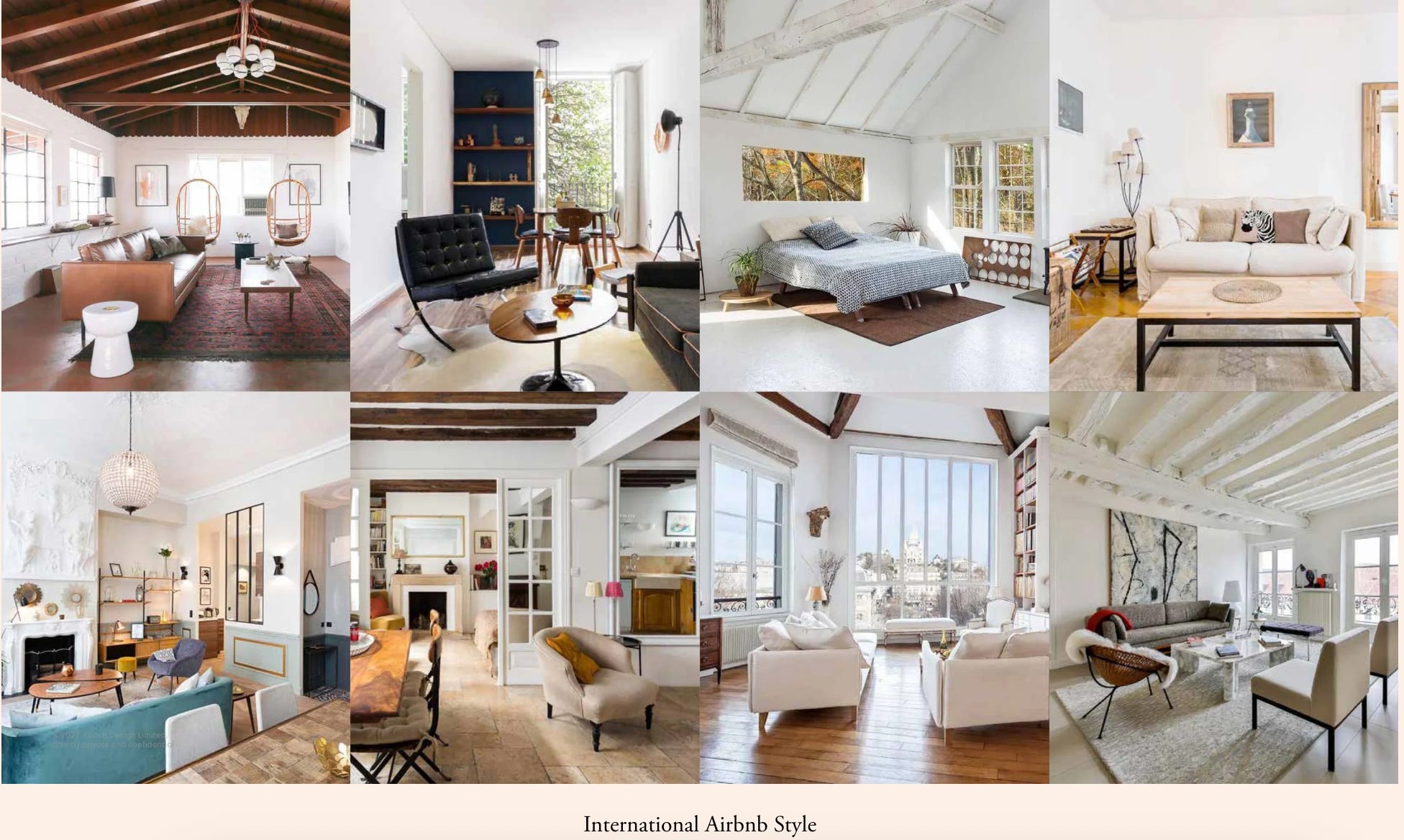
According to Harrington, the offshore world prizes status quo and stagnancy, to ensure the flow of wealth and power amongst a select few. In contrast, Austrian economist Joseph Schumpeter argued that capitalism necessitates “creative destruction”.
Yes, there are risks and losses. However, as change occurs through competition and innovation, failing old business models frees up capital to circulate in the economy so that it can be used by new entrepreneurs.
This circulation prevents extreme concentration of wealth and power, which both Schumpeter and another Austrian economist, Friedrich August von Hayek, viewed as “a kiss of death for capitalist dynamism.”
Cue the ongoing “aesthetic consolidation” and “cultural homogenisation” across biennales, art fairs, design, fashion, entertainment and more, as described by the likes of designer Jarrett Fuller, and co-founder of Spy Magazine, Kurt Andersen.
The Truth About Aspiring Art Capitals

Surely, the emergence of diverse art scenes and aspiring art capitals the past decade or so speaks to some sort of change in the art world? Not quite.
Switzerland is hardly the only tax haven. If it becomes impractical to hide fortunes there, the money could migrate to former colonies-turned-offshore financial centers like Singapore and Hong Kong. Or the United Arab Emirates (UAE), a former British protectorate.
Hong Kong narrowly overtook Switzerland to become the world’s largest cross-border wealth hub, with offshore assets rising to $2.9 trillion in 2025. Singapore jumped from ninth to fifth place over a decade, overtaking the likes of China and Luxembourg. By the end of 2025, cross-border wealth surged 11.1% in a single year in the UAE.
It’s probably not a coincidence that all three offshore centers have spent the past few decades building themselves up as art capitals with mega art fairs, museums, and art districts. Despite the effort, the future of a developed country with an offshore financial system looks bleak.
The Death Knell of Aspiring Art Capitals

Take Luxembourg - as an offshore haven, its salaries for expat wealth managers have exploded, tripling housing prices in the city. In ‘The Hidden Wealth of Nations’, Gabriel Zucman details how this new wealth has not benefitted the local economy.
Thanks to Luxembourg’s tax policies, public institutions including education are in “accelerated decline”. The result, Zucman argues, is a free trade zone for the international ultra-rich rather than a stable country.
These frailties are more apparent amidst external pressures such as AI and the wars in the Middle East. For example, Singapore’s economy is currently buckling under the strain, with living costs rising, established restaurants shutting down, and a former art district repurposed for housing.
Such a turn of events would not surprise economists and experts like Zucman and Harrington, who view offshore finance as a platform “opposed to basic principles like equality before the law, economic stability, free markets, and social solidarity.”
So much so, in 2016, top economists like Thomas Piketty and Jeffrey Sachs signed a letter urging world leaders at a UK anti-corruption summit to lift secrecy.
The signatories acknowledged this will not be easy: “There are powerful vested interests that benefit from the status quo.”
“(Yet) there is no economic justification for allowing the continuation of tax havens,” they added.
More to come on offshore finance and its impact on the systems supporting the creation of art. This includes AI, tech companies, our penchant for hyper-mobility, and an unlikely solution that is actually right up the art world’s alley. Stay tuned for more reels and newsletters.